

The Incredible Stories of Roger Federer and Mary Carillo Lit Up the ITHF
by Joel Drucker, historian-at-large
Take the man who created as epic, elegant, and enjoyable a story as tennis has ever seen. Add to the mix, the woman who has crafted so many stories with her own mix of wisdom and wit.
The man is Roger Federer.
The woman is Mary Carillo.
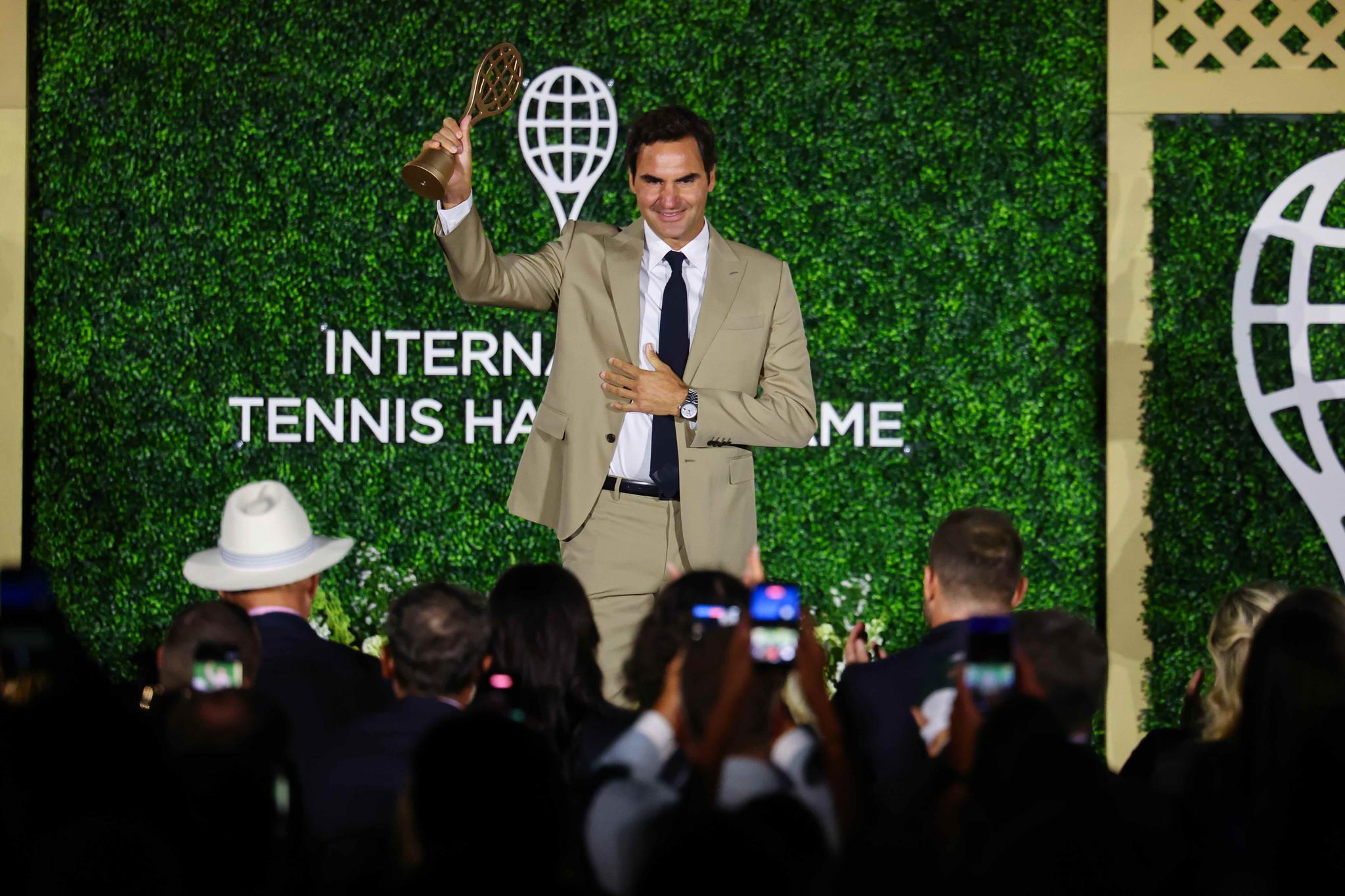
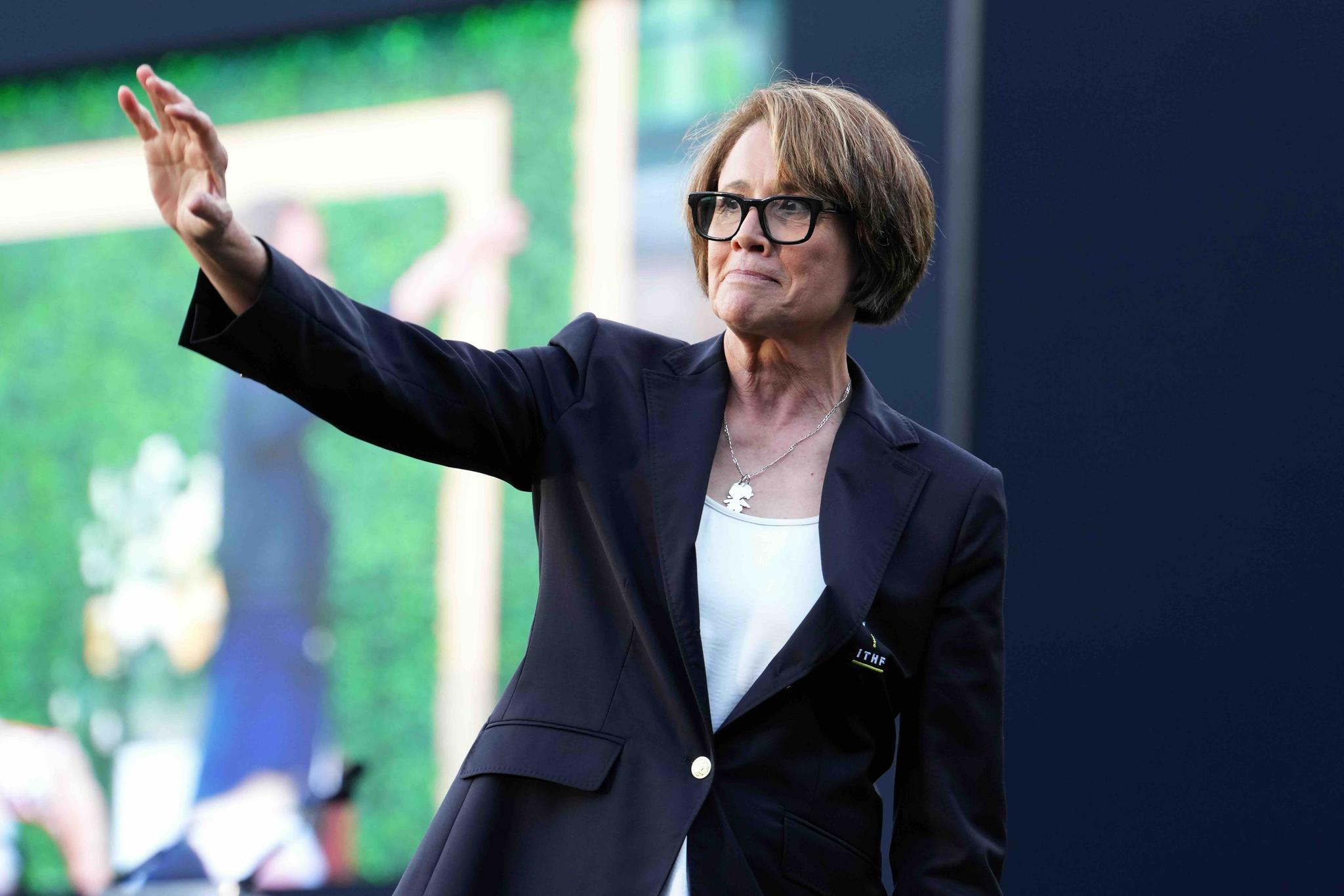
In what surely ranks as one of the most compelling and well-attended induction ceremonies in the 72-year history of the International Tennis Hall of Fame, Federer and Carillo were each inducted Saturday evening.
Tennis lovers since childhood, each still possessed of the youthful and passionate sensibilities that continue to endear them to millions, Federer and Carillo earned their way to tennis immortality with exceptionally strong work ethics and a preternatural ability to glide lightly and give deeply.
Applying the ballet-like metaphor that has long been applied to Federer, Hall of Famer Martina Navratilova described Carillo as “the Baryshnikov of the microphone.”
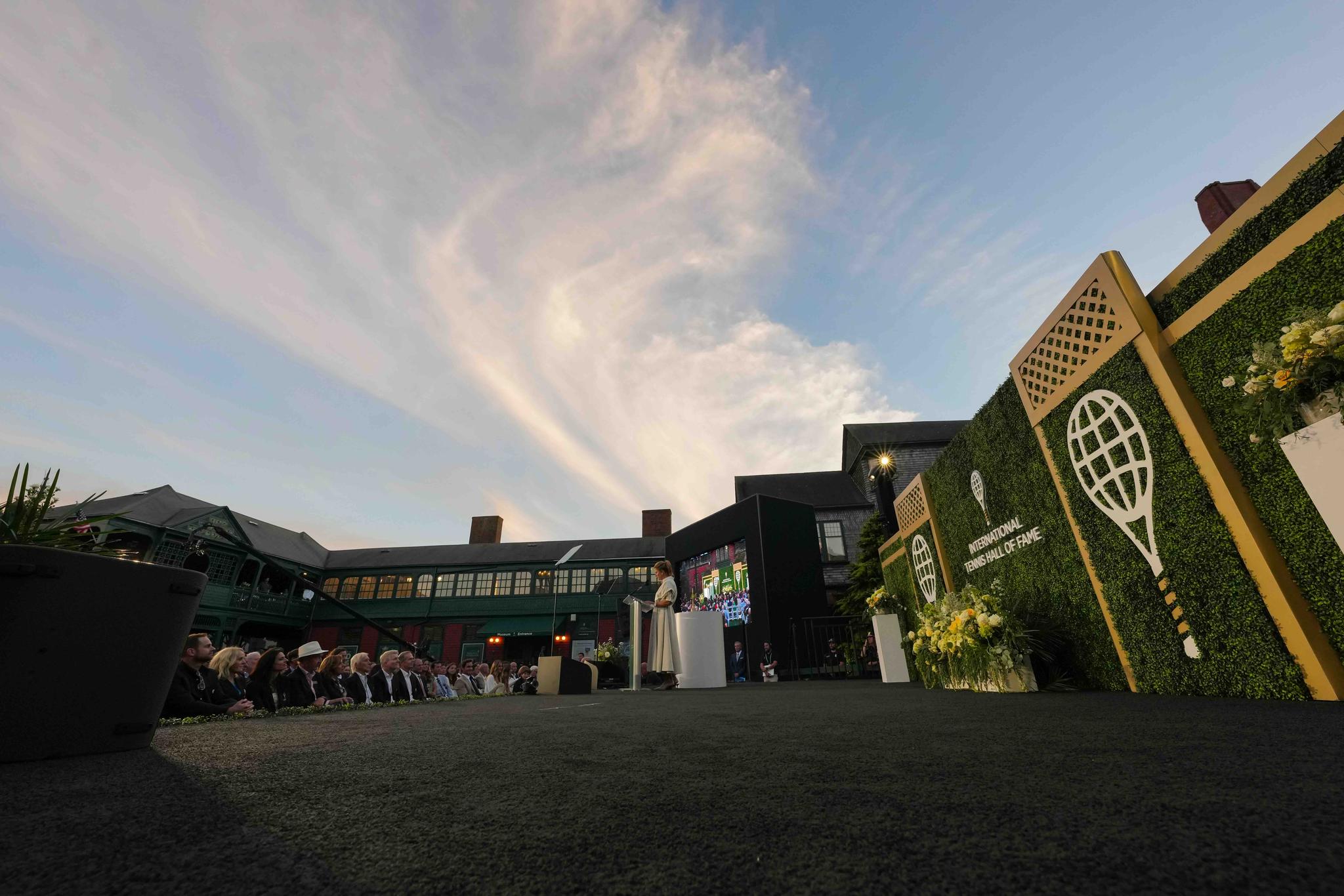
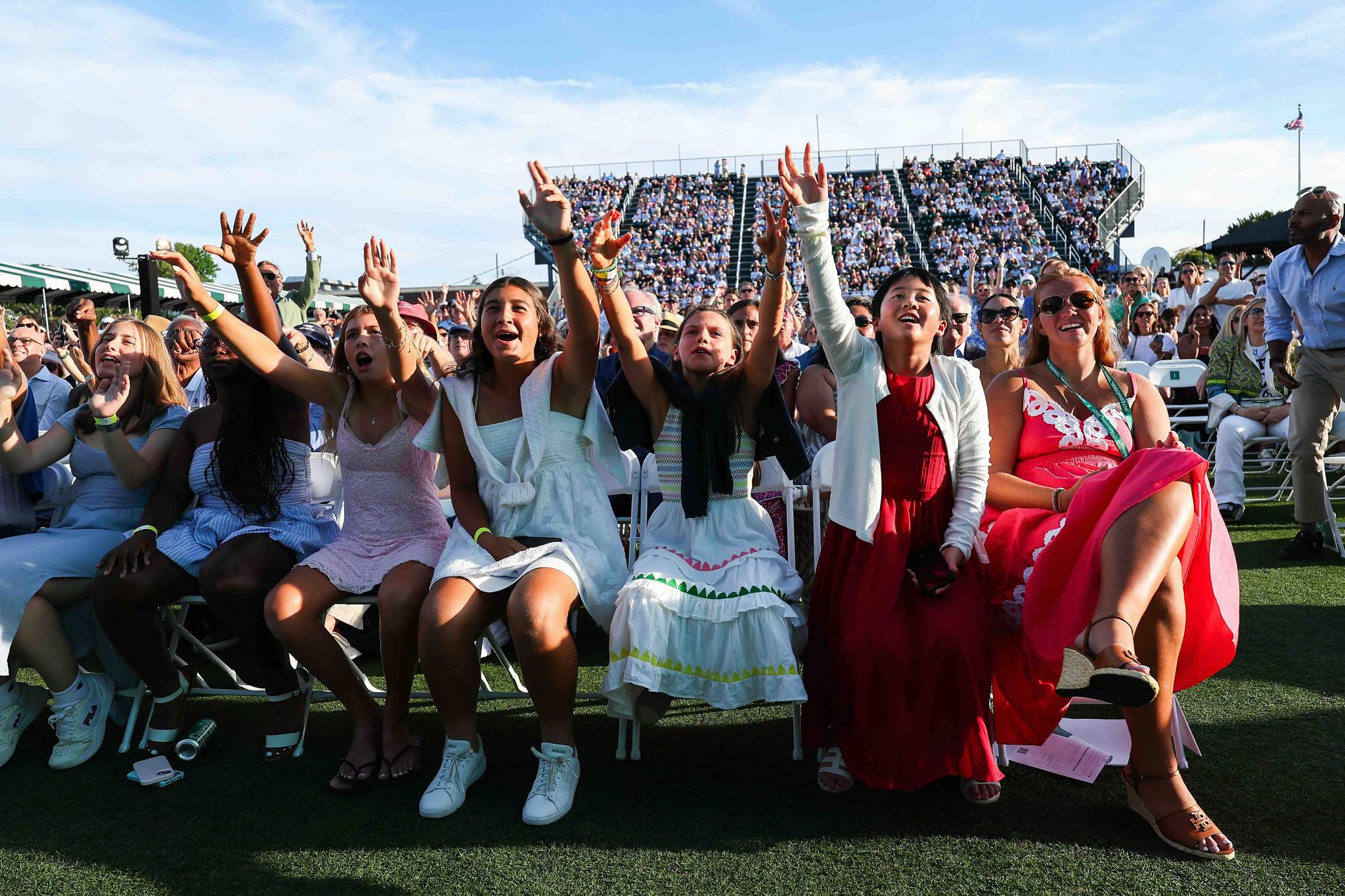
Inside the cozy horseshoe area where the ceremony took place, more than 30 Hall of Famers and several hundred others gathered. Just a few feet away, nearly 4,000 spectators filled Bill Talbert Stadium, a tennis watch party filled with excitement and delight.
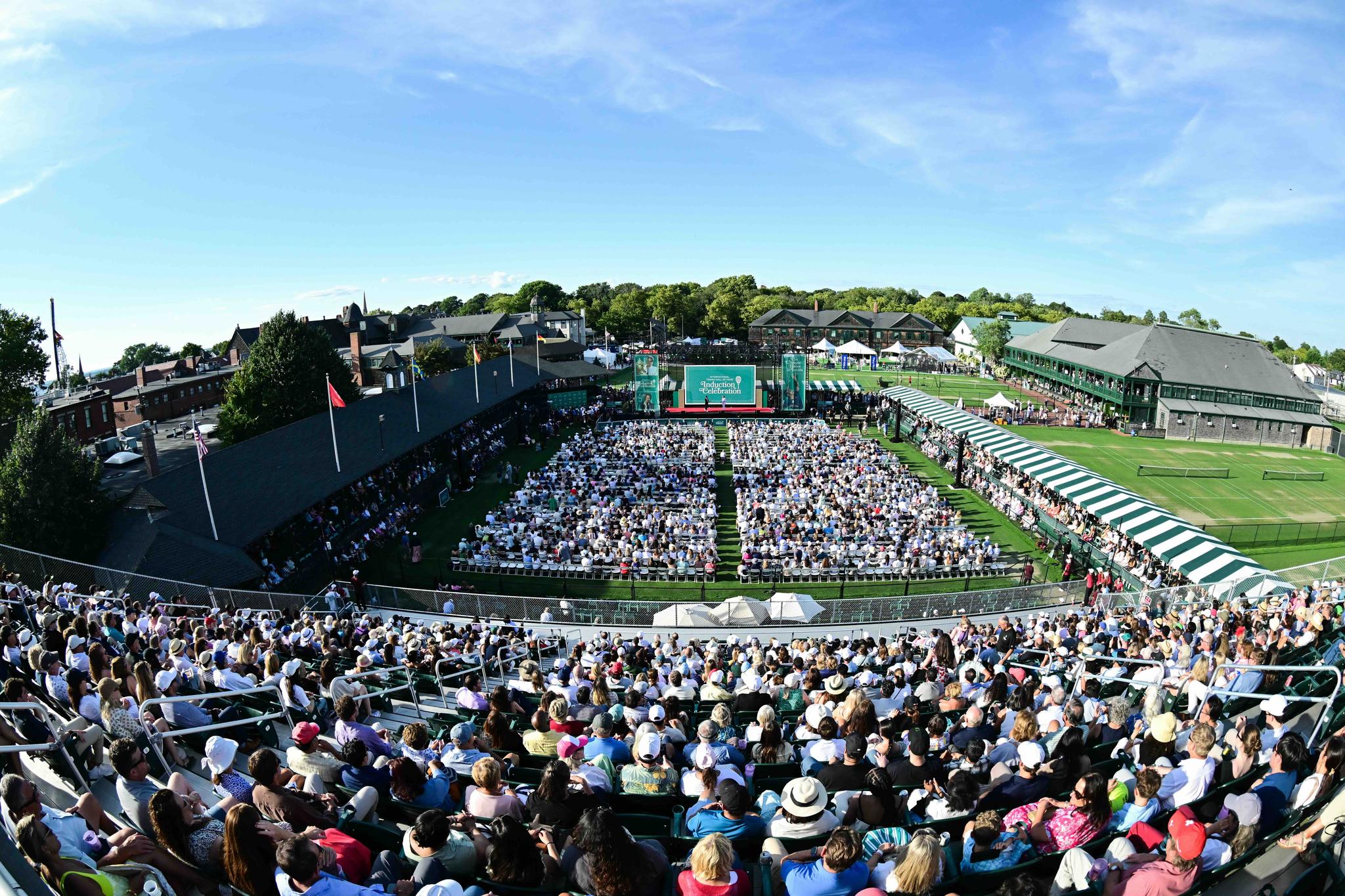
Minutes before the ceremony, standing inside the stadium, Patricia Campo of Cape Coral, Florida was delighted to have Federer answer a question she’d submitted about his journey. “I’m over the moon,” said an elated Campo. “I feel honored that I was picked.” Then there was a spectator named Andy, an aficionado of many racket sports. “He’s amazing,” said Andy. “Grace and grit can be diametrically opposed. But he integrates them seamlessly. When you see effort, you can feel the pain. But when you see Federer, you can only feel his elegance.”
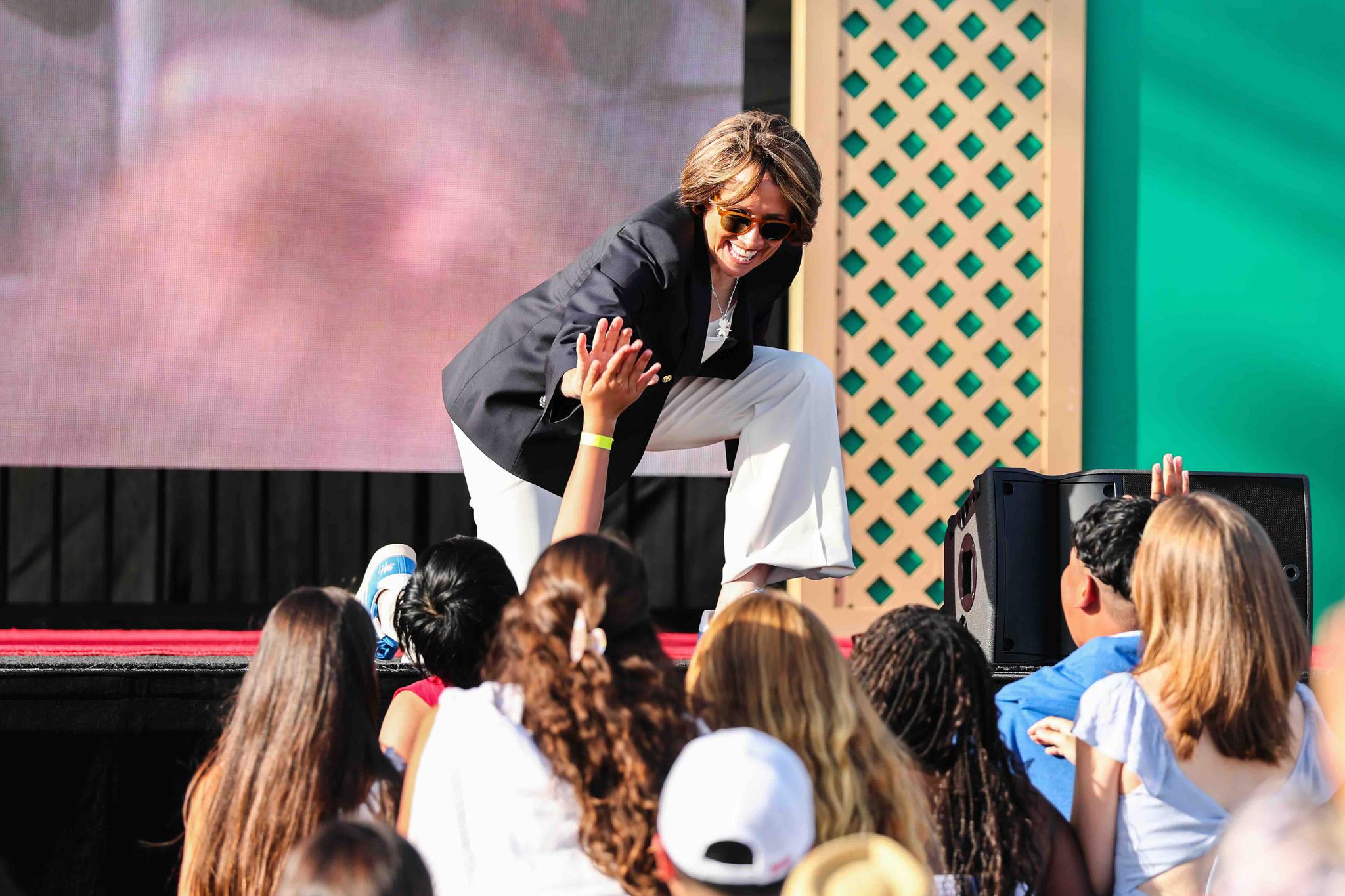
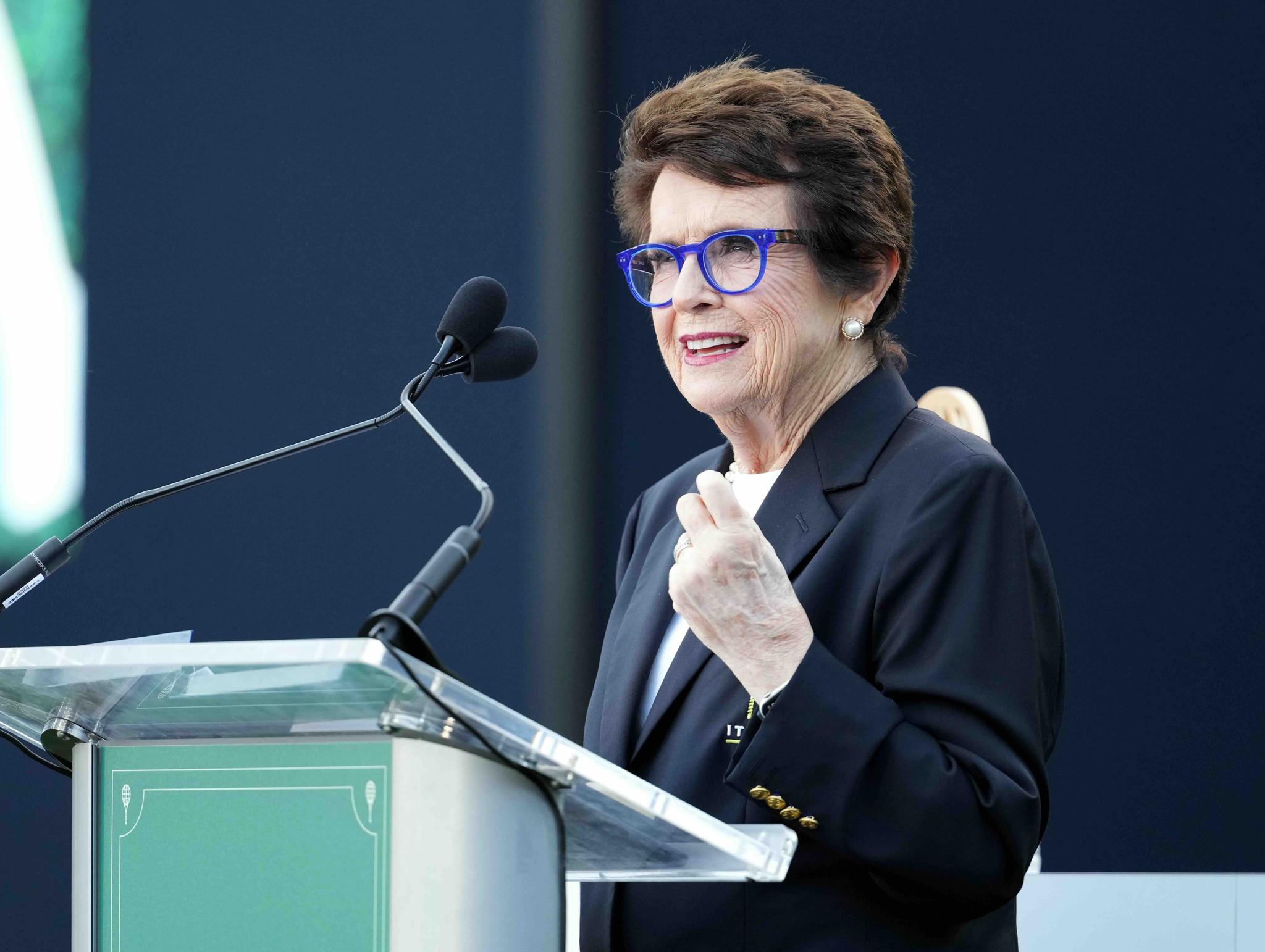
Fittingly, Carillo and Federer were introduced by personal heroes they’d met at the crucial juncture between late adolescence and early adulthood. In Carillo’s case, this was the iconic Billie Jean King, whom she’d first met in 1977 at the age of 20. “She is our storyteller,” said King. “Mary is a purist – and the queen of preparation.” As King spoke, she held up one of the black-speckled composition notebooks Carillo has long filled with notes, quotes, clips, and more as she gears up for her broadcast work.
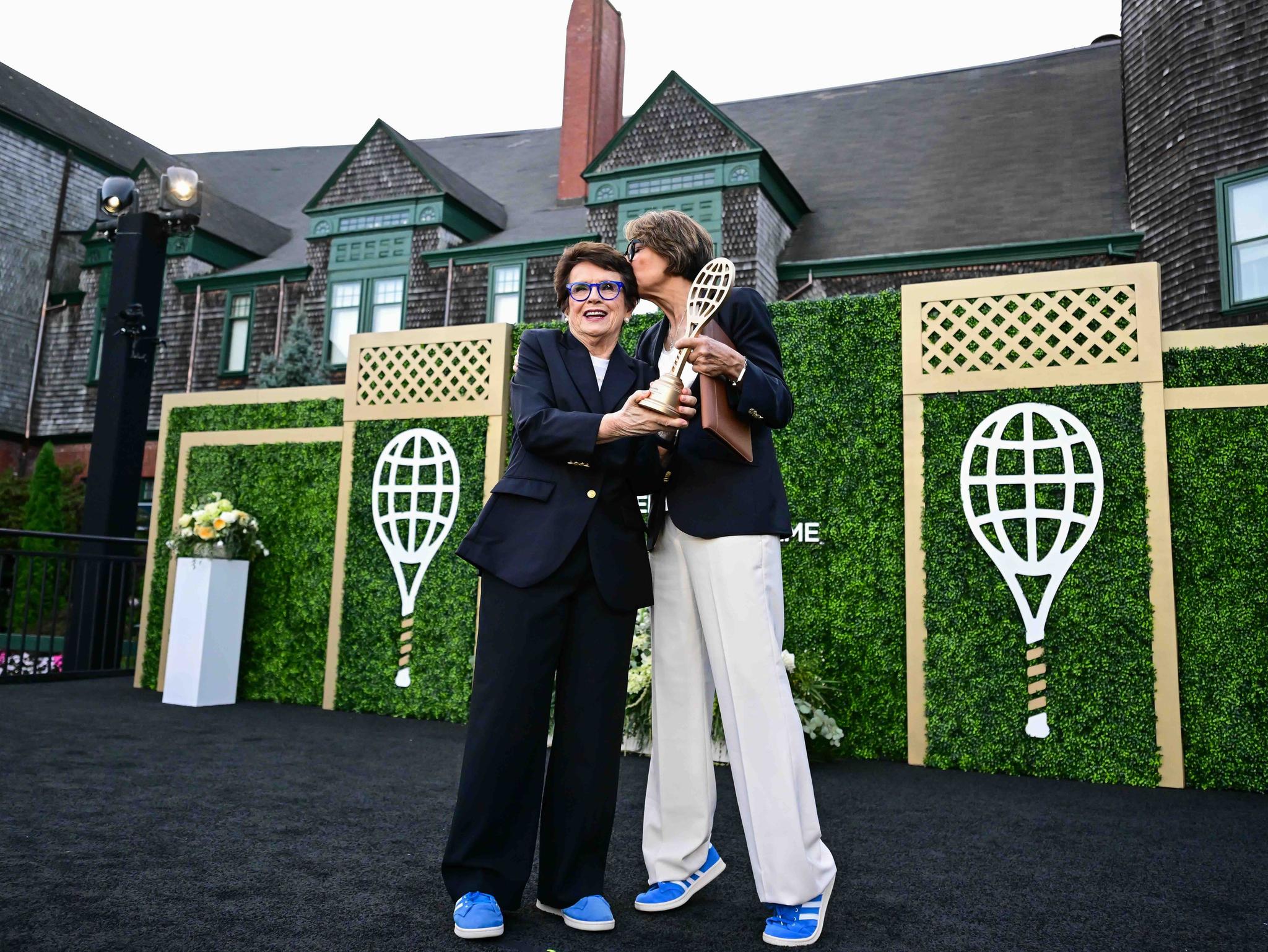
Naturally, Carillo’s speech combined trademark elements of warmth and wisdom. “That was my dream to maybe make it to Wimbledon, to walk through her gates,” she said. “But to walk through the gates here in the company of you people, that was beyond my imagining. I've made it to Wimbledon far more times with a TV badge than a player's badge, and not once did I take it for granted. What a deep privilege it was to have that credential around my neck. I wanted to be a professional, a real journalist, knowing that what counts is to be accurate and to be fair. And there were way too many times when I was neither. But that's what I strove for, anyway, to love our sport with clear eyes and, when necessary, to tell hard truths.”
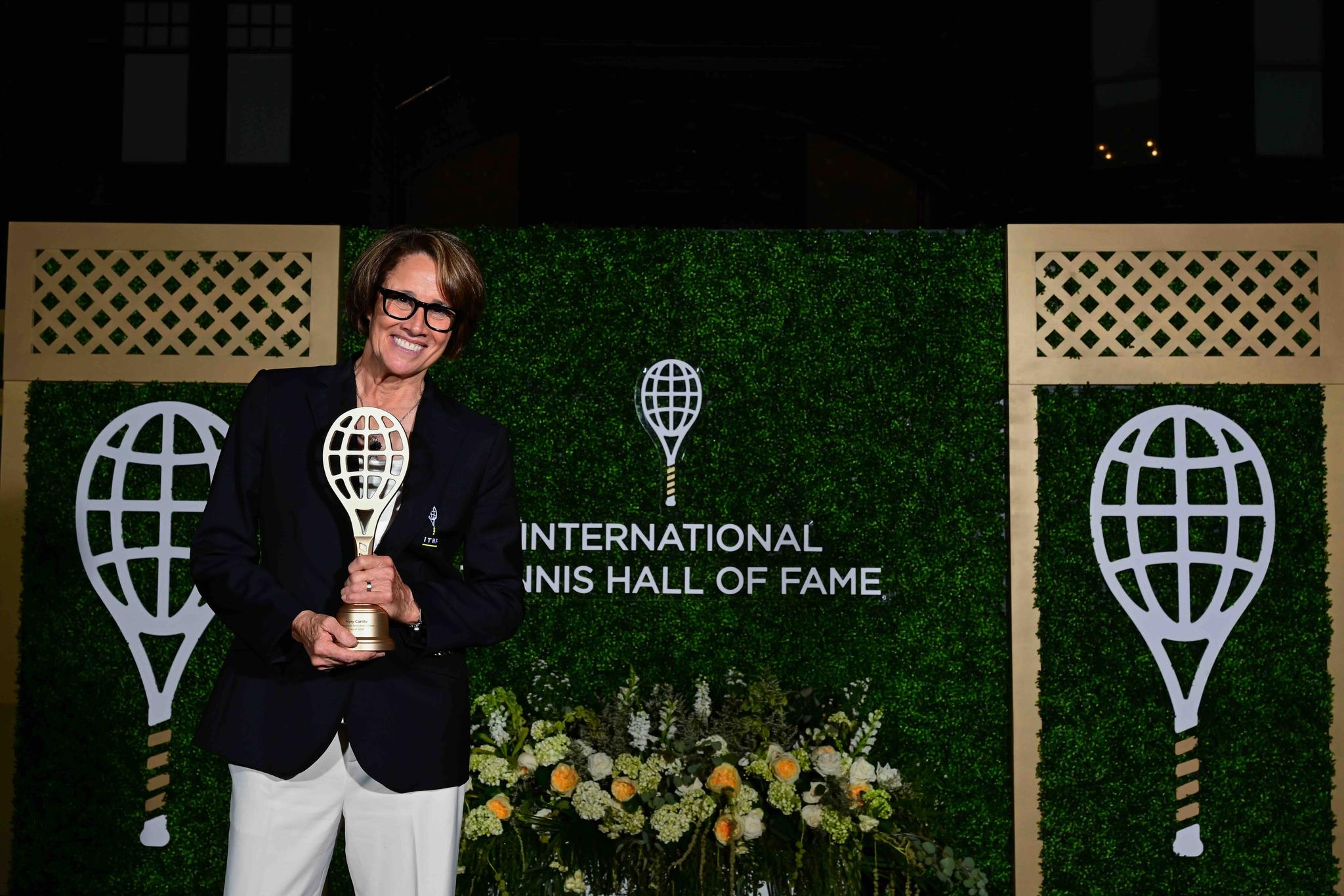
But far beyond her own achievements, Carillo took the audience on a carousel ride, circling across time to tales of childhood matches versus her father Tony and the legendary John McEnroe; to appreciation for Hall of Famers Harry Hopman, Bud Collins, Fred Stolle, and Nick Bollettieri; to fond memories of colleagues Leo Levin and Al Trautwig; to gratitude for dear mates from CBS; culminating in deep appreciation for her family – and even a poem tracking through 50 years of on-court rivalries. “Bjorn and John, Martina and Chris,” read part of Carillo’s verse, “Andre and Pete was a matchup of bliss. Billie Jean versus inequality. John and Jimmy, no frivolity.”
As she finished, Carillo said, “Stories get told, and laughs sure get laughed. The years pass, and athletes know better than anyone that you can't stop the tide. So enjoy the ride. I've been blessed to take mine with so many good people, and that is the best thing I could dream for anybody.”
For months, there have been rumors about who would introduce Federer. His greatest rival, Rafael Nadal? One of his stylistic role models, fellow titan Pete Sampras? A past coach? A friendly figure from beyond sports?
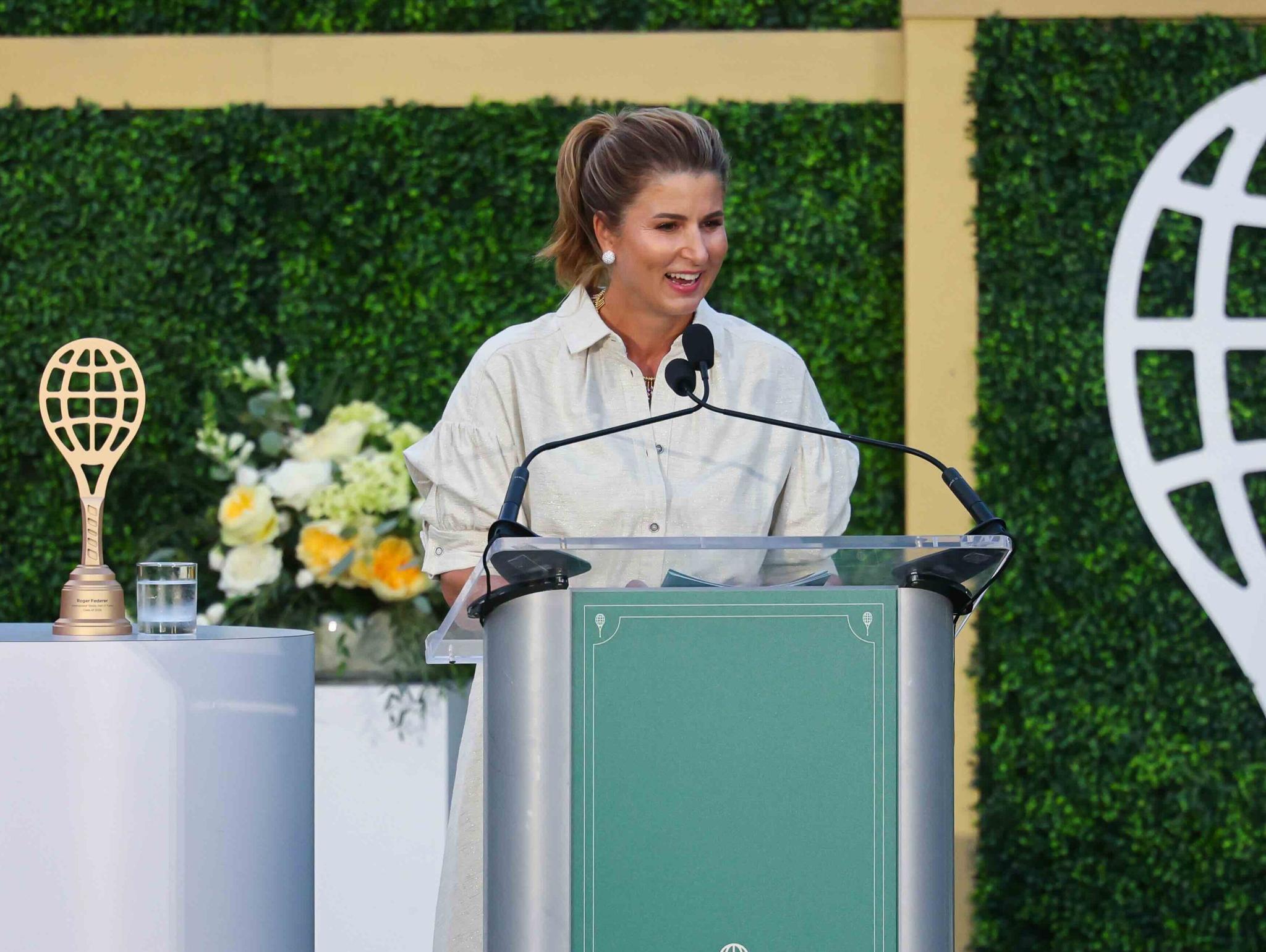
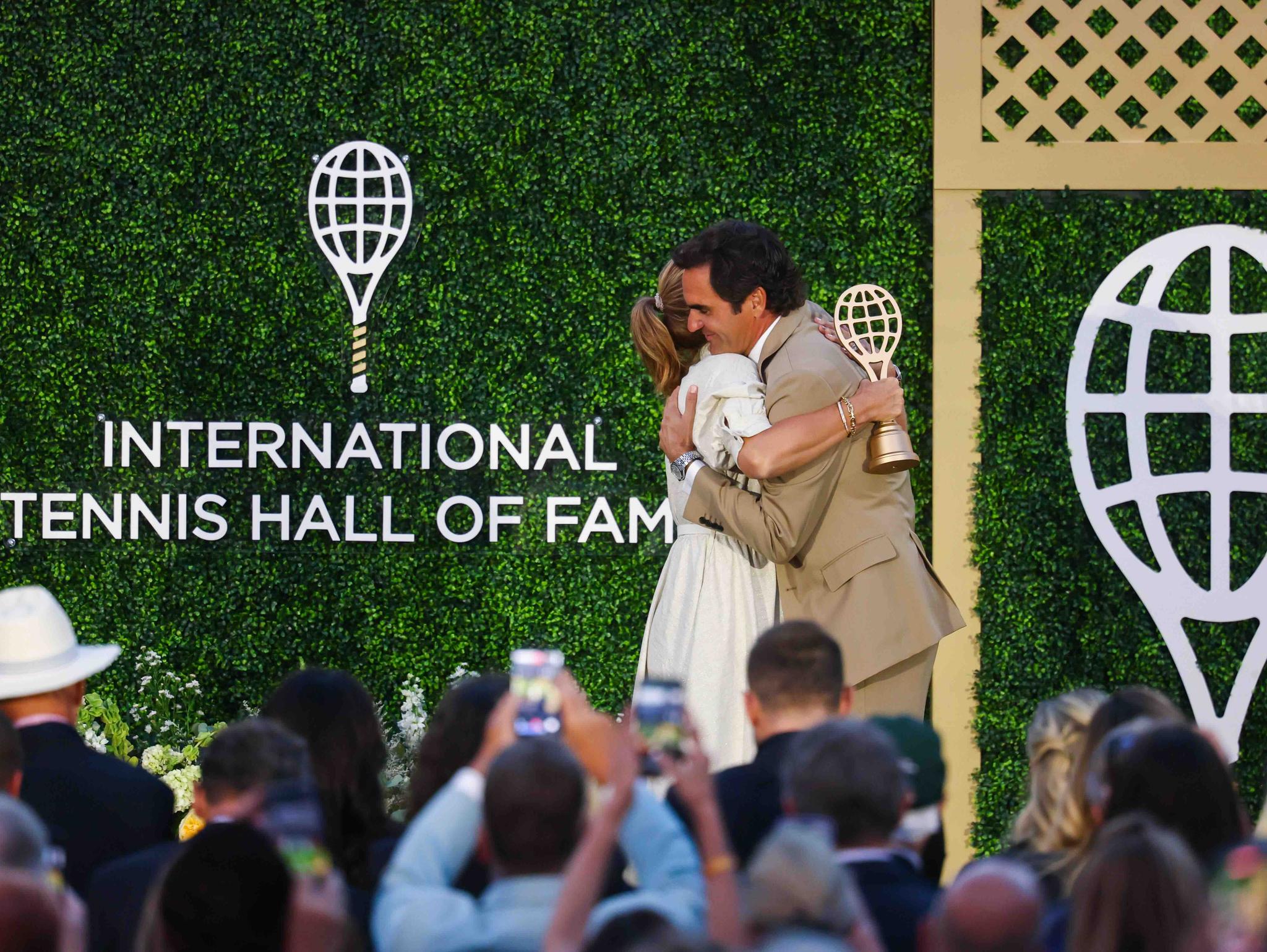
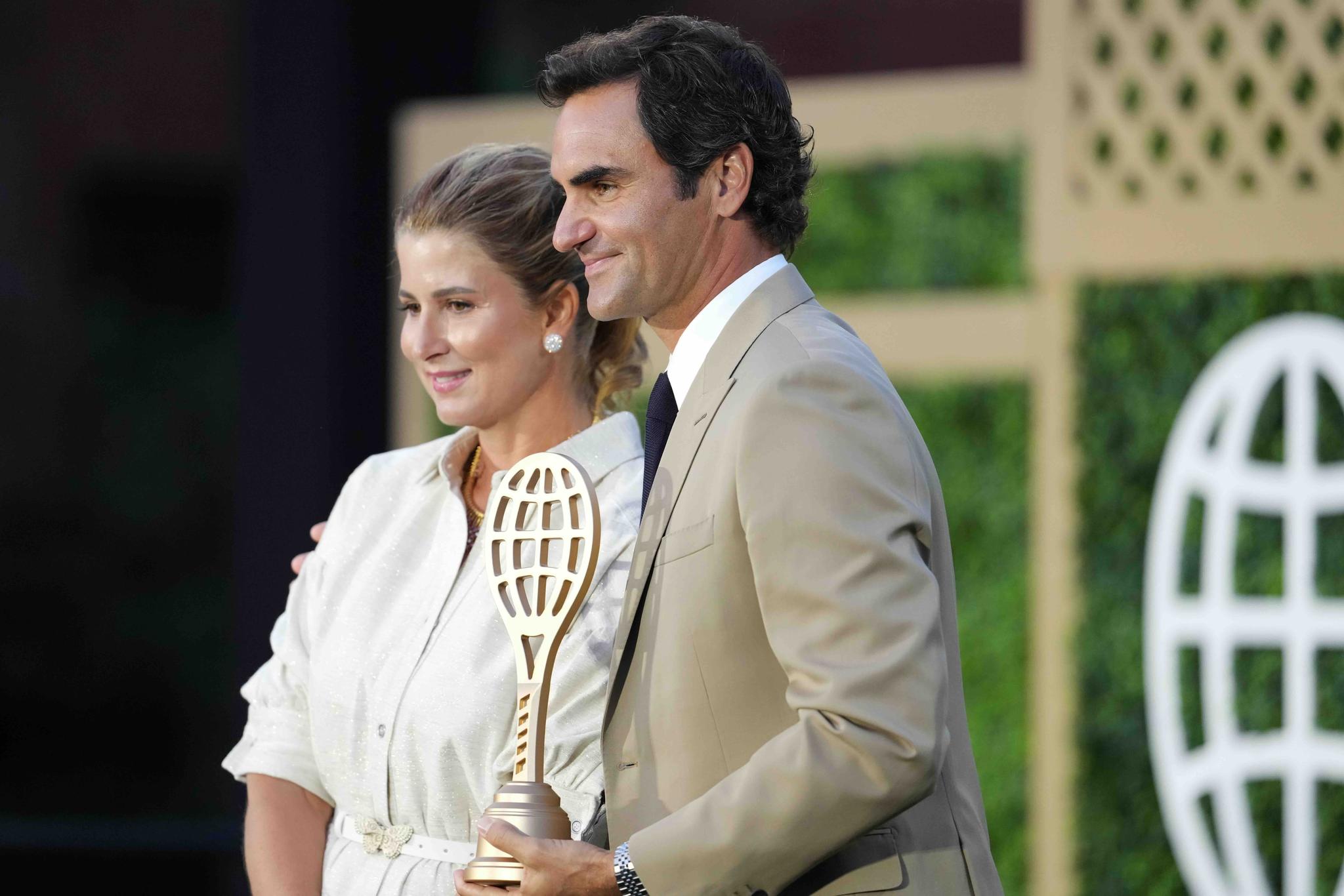
And when the answer came, it was so obvious that one could be forgiven for forgetting that for all his smooth movements and dazzling racket work, Federer most of all is a man propelled by one simple human attribute: love. Up to the stage came his wife, Mirka; always seen, rarely heard. How refreshing it would be to hear the story as it played through her eyes.
“Roger and I met at the Sydney Olympics in 2000,” said Mirka. “He was 18, and I was 21. Yes, I was the older woman. Apparently, Roger decided right away that age was just a number. He pursued me anyway, and thankfully he was persistent. When we met, he had exactly zero ATP titles. Zero. Looking back, I suppose I was there for all 103 that followed. We shared quite a journey. In those early days I would sometimes even help warm him up before matches. I had played professionally myself, so Roger thought I could help him get ready. I still remember Andy Roddick joking after the Cincinnati final: ‘I can't believe I lost to a guy whose girlfriend warmed him up.’ He really said that, and I remember, yeah. We still smile every time we speak about that.”
Mirka went on to praise Roger’s strong emphasis on family. “But tennis was never what impressed me the most,” she said. “The man behind it all is even more remarkable. He's the most devoted father that our four children could ever ask for. When I found out we were expecting twins for the first time, I told Roger that my traveling days were probably over. Without missing a beat, he said, ‘Then I won't play anymore.’ He wasn't being dramatic. He meant it. That's who Roger is. His family comes first.”
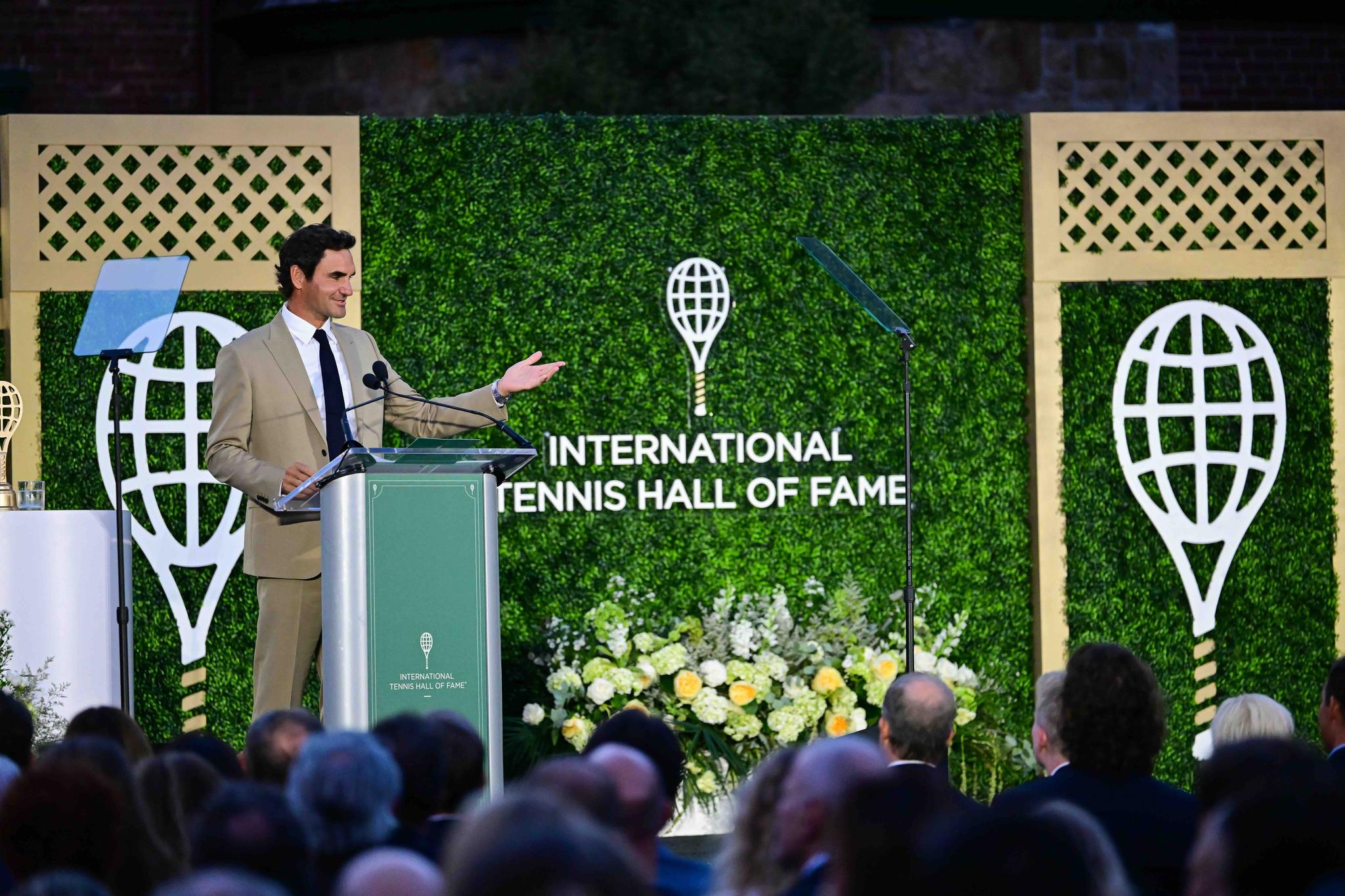
Federer was impressed. “Oh, man,” came the first two words out of his mouth. “She's a good public speaker. I didn't know that. Maybe, you know, the last time I heard Mirka speak publicly was probably at our mixed doubles we played at the Hopman Cup 24 years ago maybe.”
Following a kind shout-out to Carillo, Federer shared his thoughts on the ITHF. “I’m thrilled to have made the journey here to the International Tennis Hall of Fame,” he said. “You know, this is a beautiful place, and I've really enjoyed every minute so far. I mean, of course, I have -- you've got grass courts here. So my favorite. I was always going to have a wonderful time here. The museum is just incredible. And I really encourage everyone who comes here to see it. There's so much tennis history, the racquets, trophies, iconic outfits from the greats. And they say they have more than I was told 25,000 artifacts. Now I guess I am one of them, too.”
But as Federer spoke, praising coaches and trainers, parents and friends, it was clear that neither he nor any of those 25,000 artifacts was merely a static item. As the most complete stylist the sport has ever seen, Federer has seemingly summoned up the entire history of tennis – a series of skills and accomplishments that during the speech took him (and perhaps everyone who’s ever held a racket or even seen a match) back to how it all started.
“Yet, when I close my eyes and think and dream of the game I love, here's what I see,” he said. “I'm in Basel, Switzerland, I'm 13 years old, and it's the Swiss Indoors. I'm not competing. I'm a ball boy. I'm standing against the back wall, hands behind me, eyes on the ball. I'll never forget how the game looked from there and how it felt. The thrill of standing so close to the players, feeding them the ball, handing them the towel, seeing them sweat, watching them fight it out, figure it out, the adversity, the intensity. I remember the next morning my legs were gone. Standing all day is a lot of work.
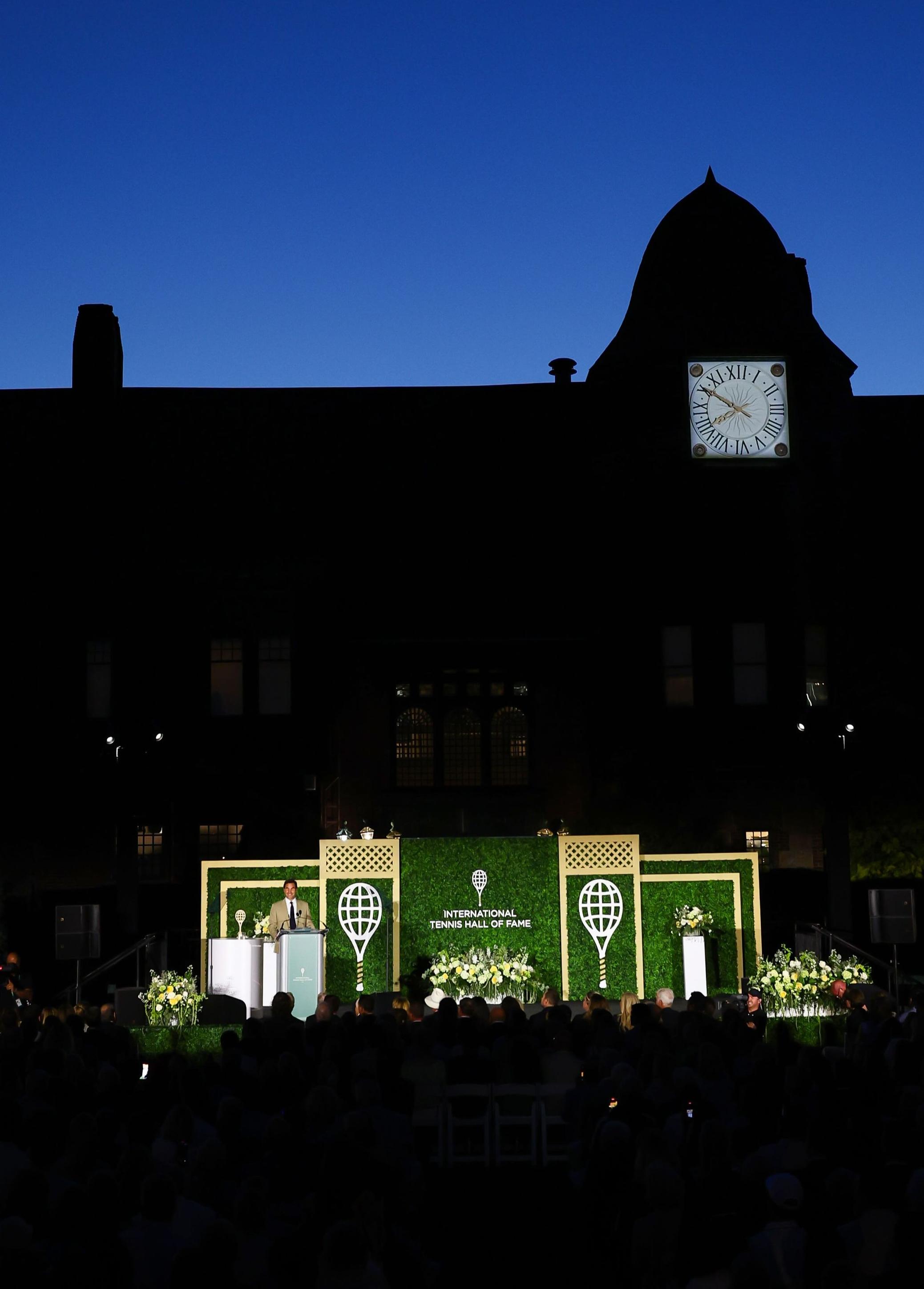
So I wanted to thank -- I really want to thank every ball kid who ever stood through my matches or all our matches, for that matter, for hours on end. I see you. I thank you. I was you.” Federer’s words spoke to the power and meaning of tennis. For the Hall of Famers, tennis has been a lifelong career, complete with demands and challenges, anxieties and pressure. But in the end, as Federer said, tennis is first and last a game.
“At every stage of my career,” he said, “I tried above all to stay true to myself, and I tried to show my love for the game, because it really mattered to me, and I also wanted it to matter to you to be worthy of your attention, worthy of your attendance, because people don't have to come watch us play. They come to be entertained, inspired, excited. They could always decide to go somewhere else, but they chose tennis, they chose us.” On this Saturday evening in Newport, amid the inductions of two of the classiest people the sport has ever seen, there was no place better to more powerfully grasp all that tennis can deliver.