



Education & Outreach
Museum Education Programs
At the Museum at the International Tennis Hall of Fame, opportunities abound for students and teachers to explore the history of tennis and the impact of its champions on the game's growth and development. Innovative programs designed around curriculum-based learning encourage the exploration of the Hall of Fame's world-class museum collection and multi-media exhibitions.
SCHOOL PROGRAMS
School programs are designed to provide a meaningful experience at the Museum and enhance classroom learning while supplementing Rhode Island school curricula meant to assist teachers in the classroom.
Lessons are built around Hall of Famers, contemporary players, and tennis history. Their lives and accomplishments form the basis for each lesson with the goal of incorporating their stories into a larger narrative thread. The lesson plans below may be printed out for use in your own classroom. Each lesson comes with directions, activity suggestions, and reproducible handouts.
The materials available here can enrich your field trip, museum visit to your school, or distance learning experience with the International Tennis Hall of Fame. The materials can also be used independently to help you teach a variety of subjects using tennis as a catalyst.
We currently have lessons available in the subjects of the History of Tennis, Communicating Tennis, and the Science of Tennis, with more to come in the future, including lessons about the Game of Tennis.
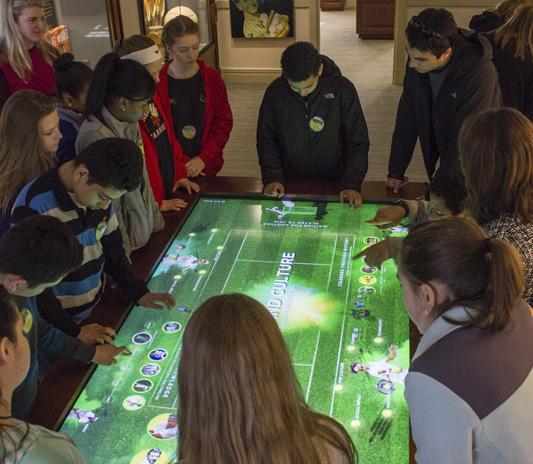
The History of Tennis
Covers civil rights, women's history, globalization, Rhode Island history, geography, and pop culture.
Civil Rights (Grades 5-8) Breaking the Barriers: African Americans and the World of Tennis explores the tennis players and coaches who broke the color barrier and changed the game for the better. Players profiled include Lucy D. Slowe, Dr. Robert Johnson, Althea Gibson, Arthur Ashe, Venus and Serena Williams, and Madison Keys.
Women's History (Grades 5-8) Women in Tennis explores the contributions women tennis players have made to the sport and society as a whole. Players profiled include Helen Hull Jacobs, Alice Marble, Althea Gibson, Billie Jean King, and Venus and Serena Williams.
- Download Full Lesson Plan - Helen H. Jacobs & Alice Marble (Grade 5)
- Download Full Lesson Plan - Helen H. Jacobs & Alice Marble (Grade 6-8)
- Download Full Lesson Plan - Althea Gibson (Grade 5)
- Download Full Lesson Plan - Althea Gibson (Grade 6-8)
- Download Full Lesson Plan - Billie Jean King (Grade 5)
- Download Full Lesson Plan - Billie Jean King (Grade 6-8)
- Download Full Lesson Plan - The Williams sisters (Grade 5)
- Download Full Lesson Plan - The Williams sisters (Grade 6-8)
Rhode Island History (Grades 5-8) The Newport Casino explores Newport in the Gilded Age of the United States and the founding of the Newport Casino, its lean years, and eventually the establishment of the National Lawn Tennis (now International Tennis) Hall of Fame.
Rhode Island History (Grades 5-8) Tennis at the Newport Casino allows students to research the history of our tennis on this historic site using different sources and points of view.
Globalization (Grades 5-8) Tennis in the Olympics explores the history of Olympic Games—both with and without tennis—and the worldwide events which took place in those Olympic years. Younger students will learn about events and their timelines, while older students will learn about the cause and effect of major world events on the Olympic games.
Globalization (Grades 5-8) Tennis and War explores conflicts in modern history and the tennis players and Hall of Famers who participated in these conflicts, whether on the battlefield or on the home front.
- Download Full Lesson Plan - Spanish-American War (Grade 5)
- Download Full Lesson Plan - Spanish-American War (Grade 6-8)
- Download Full Lesson Plan - WWI (Grade 5)
- Download Full Lesson Plan - WWI (Grade 6-8)
- Download Full Lesson Plan - WWII (Grade 5)
- Download Full Lesson Plan - WWII (Grade 6-8)
- Download Full Lesson Plan - Modern Wars (Grade 5)
- Download Full Lesson Plan - Modern Wars (Grade 6)
- Download Full Lesson Plan - Modern Wars (Grade 7)
- Download Full Lesson Plan - Modern Wars (Grade 8)
Geography (Grades 5-8) The Traveling Tennis Players explores world geography through the travels of two modern-day tennis players over a busy few months on the professional tennis tours.
Geography (Grades 3-4) Barnstorm Like a Tennis Player! focuses on the geography of the United States while teaching students about Jack Kramer and his barnstorming pro tour of the 1950s.
Pop Culture/Literacy (Grades 5-8) Tennis and Material Culture looks at certain items in the museum and how they relate to the stories behind the history of tennis. Create an exhibition catalog for artifacts in our collection.
Communicating Tennis
Covers literacy and journalism.
Literacy (Grades 5-8) Tennis and Material Culture (see above)
Journalism (Grades 5-12) Bud Collins and the Art of the Interview introduces students to the three different types of stories used in journalism and teaches students how to correctly write one of these stories (feature). They will also learn about Hall of Fame journalist Bud Collins and his contributions to the sport.
- Download Full Lesson Plan - Bud Collins and the Art of the Interview (Grade 5)
- Download Full Lesson Plan - Bud Collins and the Art of the Interview (Grade 6)
- Download Full Lesson Plan - Bud Collins and the Art of the Interview (Grade 7)
- Download Full Lesson Plan - Bud Collins and the Art of the Interview (Grade 8)
- Download Full Lesson Plan - Bud Collins and the Art of the Interview (Grades 9-10)
- Download Full Lesson Plan - Bud Collins and the Art of the Interview (Grades 11-12)
Literacy (Elementary)The ABCs of Tennis allows students to explore the game of tennis and some of its vocabulary, while at the same time learn how to compile ABC books related to the game using various methods.
- Download Full Lesson Plan - The ABCs of Tennis Opening Activity
- Download Full Lesson Plan - The ABCs of Tennis Review of Characteristics
- Download Full Lesson Plan - The ABCs of Tennis Brainstorm
- Download Full Lesson Plan - The ABCs of Tennis Storyboard
- Download Full Lesson Plan - The ABCs of Tennis Create Your Book
The Science of Tennis
Covers math, science, and physics.
Mathematics (Grades 5-6) Game, Set, Math explores the history of the Hall of Famers while students do various types of word problems.
Science (Grades 6-8) The Science of Tennis uses the Scientific Method to learn about the history of the tennis ball and how temperature affects the bounce of a tennis ball.
Science (Grades 9-12) The Physics of Tennis allows students to explore tennis by focusing on energy, force, systems, gravity, and motion of a ball.
We welcome your feedback!
CLASSROOM VISIT
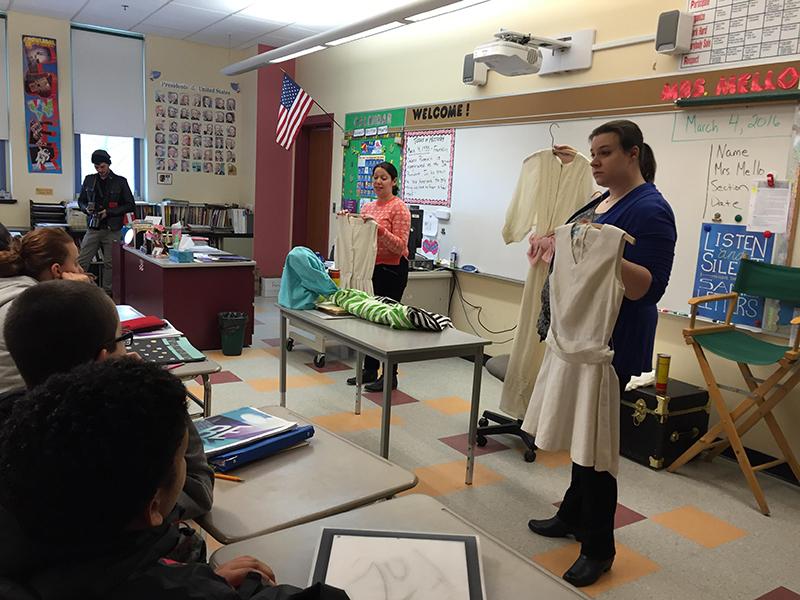
Our museum staff will bring the excitement of the International Tennis Hall of Fame to you with our Outreach Program.
Classroom Visit: A museum staffer can visit your classroom and provide hands-on activities with items from our education collection. Our education programs meet Common Core standards for Rhode Island.
To inquire about a classroom visit, complete the Classroom Visit Request Form or contact Ymelda Rivera Laxton, Manager, Research & Education, at 401-849-3990 ext. 1109.
Please note: submitting this form does not guarantee your reservation. You will be contacted by a member of the museum staff to complete your reservation. Please read our Group Tour Procedures prior to arriving.
*This program is currently on pause. Check back regularly for updates about the 2022-2023 school year.
MUSEUM FIELD TRIP
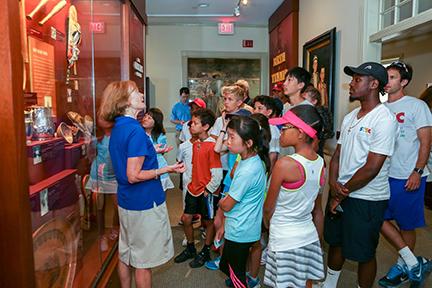
Complement and reinforce your school curriculum while also providing an ideal way to encourage students to have fun while learning. Field trip experiences are available during the school year (not available on weekends/holidays, or school-break periods).
Guided Tour: Museum staff leads one-hour student-centered, interactive tours for students or youth in grades K–12.
Self-Guided Tour: Groups are welcome to discover the Museum on their own. Groups are provided with an Activity Book to assist in their visit.
To inquire about a trip, complete the Field Trip Request Form or contact Ymelda Rivera Laxton, Manager, Research & Education, at 401-849-3990 ext. 1109.
Please note: submitting this form does not guarantee your reservation. You will be contacted by a member of the museum staff to complete your reservation. Please read our Group Tour Procedures prior to arriving.
