


2017 Inductee Monique Kalkman’s Four Greatest Moments

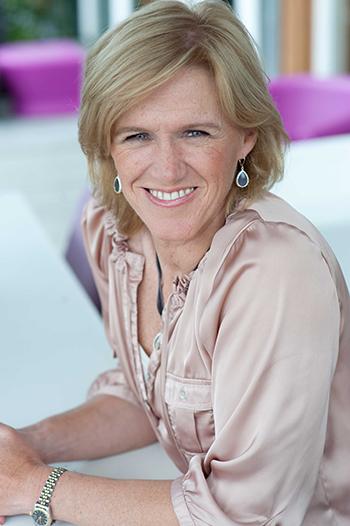
This July, Monique Kalkman-van den Bosch of the Netherlands will enter the International Tennis Hall of Fame as an inductee in the Wheelchair Tennis category. Monique recently reflected on four of her greatest moments in tennis with ITHF historian-at-large Joel Drucker.
Number 1: Going For Gold
Wheelchair tennis was set to become a full-fledged Olympic sport at the 1992 Summer Games. But to earn the precious medal, Monique had to change her game. “I was playing tennis as an able-bodied player, trying to hit the ball hard and flat,” she says. “I had to learn a lot about angles and space – and change everything.” For a while, it was frustrating, she was losing to players she’d previously beaten. But hard work and patience paid off. That summer in Barcelona, Monique struck gold, taking the singles and winning the doubles with 2014 ITHF inductee, Chantal Vandierendonck.
Number 2:
Love & Love
In 1990, Marc Kalkman was Monique’s coach. One day that year, the two made a bet: Could Marc beat Monique in wheelchair tennis? No chance – Monique won 6-love. Soon enough, the two grew even closer, eventually marrying and having a son.
Number 3: Changing The Guard
Monique had decided that 1997 would be her last year of competition. Keen to give back to the game, she worked closely that year with an ambitious teenager named Esther Vergeer. “She was so eager,” says Monique. “It was terrific to help her.”
Monique’s last tournament came at the 1997 Masters in Eindhoven, Netherlands. After losing in the finals – in a third-set tiebreaker – she approached Vergeer and another player she’d helped, Sonja Peters. Handing her Wilson Hammer racquets to her two protégés, Monique kindly said, “Now it’s your turn.” Each went on to have tremendous careers, Peters winning an Olympic medal and the US Open, Vergeer earning 42 Grand Slam titles.
Number 4: Beyond The Lines
Over the course of her career, Monique has given more than 150 clinics, spreading the word of tennis to all corners of the world. She’s particularly proud of the work she’s done in South Africa, where the income gap is incredibly wide. Monique believes , “Tennis can be a very powerful tool for helping people have a better quality of life.”